

Overture
My Ordinary World
My Ordinary World3
Phase 1: Before the Questions
I don’t remember choosing my faith. It feels like something I woke up inside of, the way you wake up inside a family or a language. It was already there—spoken over me, prayed for me, explained to me before I knew what explanations were. Faith wasn’t an idea so much as an atmosphere. It was the background music of my life.
I knew who God was because I was told. I knew what was right and wrong because it had already been decided. There was comfort in that. The world felt ordered. Even when life was hard, it was hard within a framework. Pain had a reason. Obedience had a reward. Doubt was a temptation, not a signal.
Faith gave me belonging. I knew where I stood and who I stood with. I knew the language, the rhythms, the rules. I knew when to stand, when to sit, when to speak, when to be quiet. There was safety in sameness—familiar songs, familiar answers, familiar authority. I trusted the people who taught me because they sounded confident, and confidence felt like truth.
I didn’t question much, not because I was afraid, but because there didn’t seem to be a reason to. The answers came quickly and cleanly. Every question I might have asked already had a response waiting for it. If something didn’t make sense, I assumed it was my limitation, not the system’s. Faith taught me humility, but it also taught me to mistrust my own curiosity.
I believed because believing worked. It helped me behave better. It gave meaning to suffering. It promised that nothing was wasted. I didn’t feel trapped—I felt protected. The boundaries felt like care. The rules felt like wisdom. I thought certainty was a virtue, and I practiced it faithfully.
Looking back, I can see how much peace there was in not having to choose. My beliefs weren’t something I carried; they carried me. They told me who I was, why I mattered, and where I was going. I didn’t feel small inside them—I felt held.
There was also innocence there. I didn’t know what I didn’t know. I hadn’t yet encountered stories that didn’t fit, people who complicated the categories, or questions that refused to stay quiet. Faith felt whole because my world was still small enough for it to contain.
If someone had asked me then whether I believed, I would have said yes without hesitation—not as a declaration, but as a fact. Like saying the sky is up or fire is hot. It wasn’t something I defended. It simply was.
This was my ordinary world.
Not broken.
Not examined.
And, in its own way, deeply sincere.
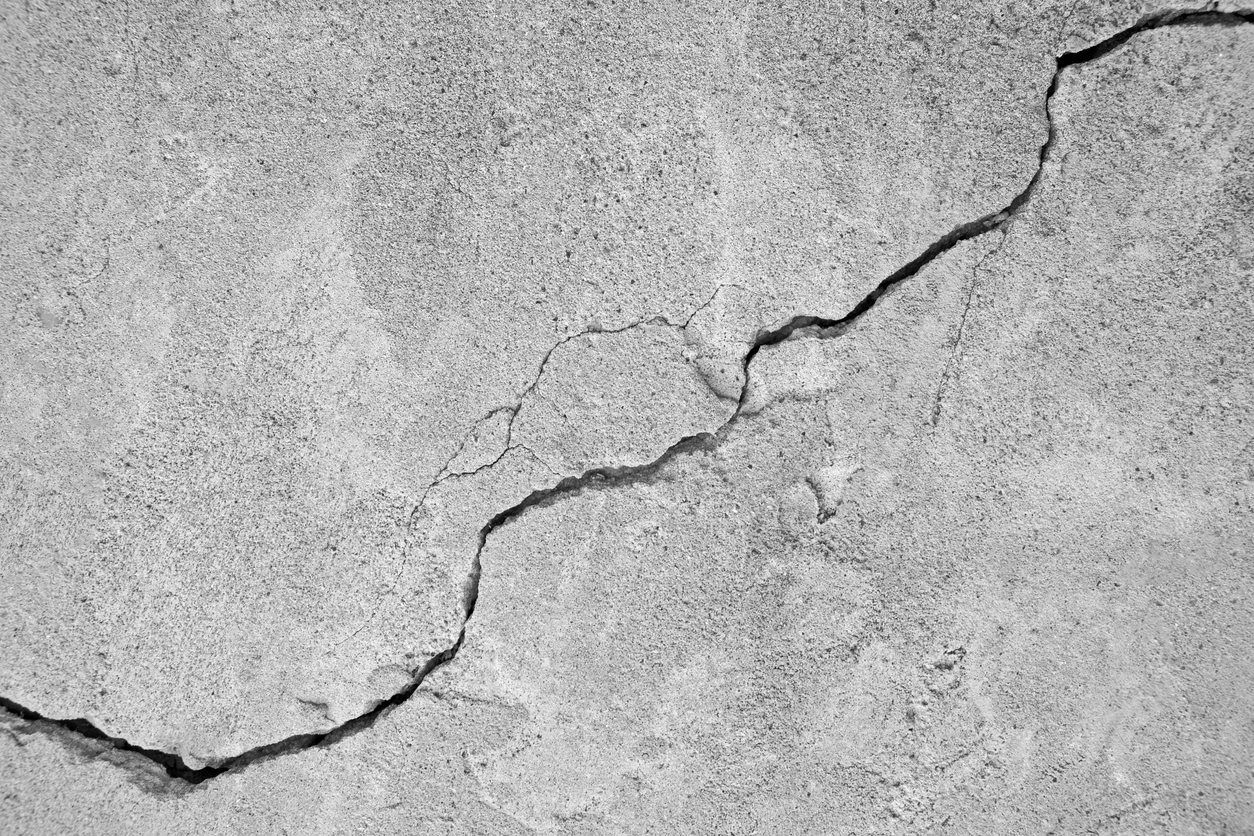
Hairline Cracks
Phase 2: When Something Didn’t Sit Right
At first, nothing actually changed. I still showed up. I still believed. I still said the right words at the right times. If anyone had asked, I would have told them my faith was strong. And in many ways, it was. It just wasn’t as quiet as it used to be.
The questions didn’t arrive dramatically. They came as interruptions—small moments of discomfort I didn’t have language for yet. A story that didn’t land the way it once had. A rule that felt heavier than it should have. A person I cared about who didn’t fit cleanly into the categories I’d been given. I noticed the tension, then moved past it. Or at least, I tried to.
I told myself this was normal. Everyone has questions. Doubt, I’d been taught, was part of growth—as long as it stayed controlled. So I learned how to manage it. I prayed more carefully. I read the approved books. I listened to people who sounded certain enough to calm me down. I didn’t question the structure; I questioned myself.
There was a subtle shift in how faith felt. What used to be resting became effort. I paid more attention to how I spoke, how I thought, how I reacted. I worked harder to believe the right things, not because I didn’t believe them, but because I wanted to keep believing them. Certainty became something I maintained, not something I inhabited.
I noticed how quickly certain questions made the room uncomfortable. Some conversations ended too fast. Some answers felt rehearsed. I started to sense invisible lines—topics that could be approached, and others that couldn’t. No one told me explicitly not to cross them, but I felt the pressure all the same. Belonging, I realized, had conditions.
Still, I wasn’t trying to leave. I wasn’t even trying to challenge anything. I wanted reassurance, not disruption. I wanted to resolve the tension, not pull at it. I told myself that faith wasn’t supposed to feel easy all the time. That wrestling was faithful. That obedience sometimes meant silencing questions that hadn’t earned the right to speak yet.
But the discomfort lingered. It showed up when I was alone. It showed up in moments when the answers felt too quick, too clean for the complexity in front of me. I started to notice the distance between what was said out loud and what was felt quietly. And once I noticed it, I couldn’t entirely forget it.
I still believed. I still trusted. But there was now a faint awareness beneath it all—a sense that something didn’t fully align, even if I couldn’t explain what or why. Faith hadn’t broken. It had just developed a hum beneath the surface.
I didn’t call it doubt.
I called it growth.
And for a while, that was enough.
The Night it Stopped Holding
Dark Night Questions1
Phase 3: When It Broke Open
I can point to the moment when pretending stopped working. Not because I wanted it to stop, but because my body knew before my mind caught up. The answers were still there, but they no longer landed. They slid off. What used to soothe me now made me restless. What used to feel solid suddenly felt staged.
I didn’t lose faith all at once. I lost trust in the way I had been holding it.
Something happened—maybe a conversation, a loss, a realization, or a truth I couldn’t unlearn—and the system I depended on failed to hold it. I brought real questions, real pain, real complexity, and what I received felt thin. Rehearsed. Conditional. I remember thinking, If this is true, why does it feel like it can’t handle honesty?
That was the moment fear entered the room.
I was taught that faith was unshakeable. So when it started to shake, I assumed the problem was me. I tried harder. Prayed louder. Explained myself away. But the more I forced certainty, the more fractured it felt. I wasn’t rebelling—I was unraveling.
The ground I’d been standing on didn’t collapse dramatically. It gave way quietly. One belief stopped making sense. Then another. I’d reach for the old language and feel it dissolve in my mouth. Words that once carried meaning now felt hollow, like props from a play I suddenly knew I was in.
There was grief in that realization. Not just for the beliefs, but for the version of myself who needed them to stay intact. I mourned the simplicity I was losing. I mourned the safety of not having to choose. I mourned the certainty that told me everything would be okay as long as I stayed in line.
And there was shame. I felt like I was failing at something everyone else seemed to manage just fine. I worried about what this meant for my identity, my relationships, my future. I worried about what I was becoming by asking questions I couldn’t put back.
I didn’t feel brave. I felt exposed.
What hurt most wasn’t that I no longer had answers—it was realizing how much of my faith depended on not looking too closely. Once I saw that, I couldn’t unsee it. I didn’t want to destroy anything. I just needed something that could survive being touched.
The crisis wasn’t only theological. It was existential. If this framework couldn’t hold truth, pain, or honesty, then what else had I been standing on without realizing it? And if I let it fall, who would I be without it?
I didn’t choose the breaking.
But once it began, I chose not to lie to myself about it.
This was the moment I stopped protecting belief at the expense of integrity. I didn’t know what would come next. I only knew that going back—pretending nothing had happened—would cost me more than moving forward.
Faith didn’t leave quietly.
It cracked.
And so did I.
Taking it Part
Too Big to Believe
Phase 4: Taking It Apart
After the breaking, I didn’t rush to replace what I’d lost. I didn’t look for a new belief system to stand in for the old one. I slowed down. I stayed close to the questions. I let the silence stretch. What came next wasn’t rebellion or relief—it was work.
I began to take things apart.
Not everything at once. Not angrily. I examined beliefs the way you handle something fragile, turning each piece slowly, asking where it came from and what it had been doing in my life. I wanted to know what was essential and what had simply been inherited. What had nourished me, and what had only controlled me.
For the first time, I separated faith from fear. I noticed how often obedience had been framed as virtue when it was really compliance. How often love had been described in ways that made it conditional. How frequently certainty had been praised, not because it was true, but because it was quiet and manageable.
I reread the stories I had been given, this time without rushing to defend them. I listened for what had been emphasized and what had been omitted. I paid attention to whose voices had been amplified and whose had been ignored. The more I looked, the more I realized how much power shaped what I’d been taught to call “truth.”
This wasn’t comfortable. There was grief in naming what I had trusted without consent. There was anger in realizing how much of myself I had shrunk to stay acceptable. But there was also clarity. I was no longer confusing discomfort with disobedience or equating silence with peace.
I learned to say, This no longer works for me, without immediately following it with shame. I learned to let some beliefs go without demanding replacements. I learned that taking something apart doesn’t automatically mean you hate it—it can mean you’re finally honest enough to see it clearly.
What surprised me most was that some things survived the scrutiny. Certain values didn’t collapse when I removed fear from them. Compassion held. Curiosity held. A sense of meaning held—though it looked different now, less rigid, more alive.
I stopped asking whether something was sacred because it had always been there. I started asking whether it produced honesty, freedom, and care. That question became my compass.
This phase didn’t feel like losing faith. It felt like refusing to protect ideas that couldn’t survive daylight. I wasn’t trying to dismantle everything—I was trying to find what was real enough to keep.
There was humility in this process. I no longer assumed I was right. But there was also strength. I trusted myself enough to look closely, to sit with complexity, to let truth be something discovered rather than defended.
I wasn’t rebuilding yet.
I wasn’t ready to name what I believed.
I was clearing space.
And for the first time, that felt like progress.
Open Hands
Phase 5: The In-Between
After taking everything apart, there was nothing left to stand on the way I used to. No structure. No system. No certainty waiting to catch me. What remained was space—wide, unfamiliar, and strangely calm.
This was the phase I hadn’t planned for. I thought disassembly would naturally lead to answers, or at least to a new framework. Instead, it led to not knowing. And I discovered that not knowing wasn’t as frightening as I had been taught. It was uncomfortable, yes—but it was also clean. There was no one left to impress. No belief left to defend.
I stopped trying to name what I believed. Every label felt too heavy, too confident for the reality I was living in. I didn’t want to replace certainty with another form of certainty. I wanted to stay honest, even if honesty meant uncertainty.
My spiritual life—if I could still call it that—became simpler. Less language. Less effort. Sometimes it was just breathing and noticing that I was still here. Sometimes it was grief without a villain. Sometimes it was gratitude without an explanation. I learned that meaning didn’t disappear just because I stopped explaining it.
There were moments of loneliness in this space. I didn’t belong where I once did, but I hadn’t found a new community yet. Conversations felt awkward. People wanted to know what I believed now, and I didn’t know how to answer them. I’m not sure felt insufficient in a world that rewards clarity.
But there was also relief. I wasn’t performing anymore. I wasn’t editing my questions or policing my thoughts. I wasn’t afraid of being wrong in the same way. I had stopped demanding resolution from every experience. Life didn’t need to make sense in order to matter.
I began to trust small things. My own intuition. The quiet sense of rightness when I acted with care. The way honesty felt in my body. I learned that ambiguity doesn’t mean absence, and silence doesn’t mean nothing is happening.
This phase taught me patience. Not the kind that waits for answers, but the kind that stays present without them. I learned how to stand in tension without rushing to escape it. I learned how to let mystery remain mystery.
I didn’t feel lost, exactly.
I felt unanchored—but open.
This was a threshold, not a destination. I could feel something forming, but I refused to force it into shape. I trusted that whatever came next would need this space to breathe.
For now, I stayed here.
In the not-knowing.
In the quiet.
And surprisingly, that was enough.
What We Carry Forward
Phase 6: Choosing What to Carry
I didn’t wake up one day with new beliefs fully formed. There was no moment of revelation, no clear line between not knowing and knowing. What changed was quieter than that. I started making choices—small ones at first—about what I would carry forward and what I would leave behind.
After living in the in-between, I began to notice what consistently brought me back to myself. Certain values held steady even without a system to support them. Kindness didn’t disappear when belief loosened. Responsibility still mattered. Truthfulness—especially toward myself—felt non-negotiable. I realized that I didn’t need certainty to live with intention.
I stopped trying to rebuild the old structure with better materials. Instead, I built something smaller and more flexible. I allowed my beliefs to be provisional, open to revision. I no longer needed them to explain everything or protect me from discomfort. I needed them to help me live well.
This phase was marked less by theology and more by practice. How do I treat people when no doctrine is watching? How do I make decisions when fear is no longer the motivator? How do I stay present to my life instead of outsourcing meaning to a framework?
I found myself returning to stories—not as rules or proofs, but as language. Metaphors instead of mandates. I let them inform me without commanding me. I learned to hold spirituality, if I used the word at all, as an orientation rather than a destination.
There was grief in this stage too. Some things didn’t come back. I had to accept that certain comforts belonged to an earlier version of me. But I also felt a new kind of confidence—not the brittle confidence of certainty, but the steady confidence of alignment. My inner life and my outer actions began to match again.
What surprised me most was how ordinary this phase felt. Reconstruction didn’t require grand declarations. It showed up in daily choices: telling the truth when it was inconvenient, staying when it would have been easier to leave, choosing compassion without needing credit or reward.
I wasn’t trying to be “right” anymore. I was trying to be responsible—with my words, my influence, my time. I understood that meaning is something you participate in, not something you possess.
If faith still had a place in my life, it was no longer something I inherited or defended. It was something I practiced. Something shaped by experience, humility, and care. Something that could change without disappearing.
This phase wasn’t about arriving at answers.
It was about learning how to live without betraying myself.
And for the first time in a long time, that felt like enough.
Nothing Left to Prove
Phase 7: Living It
At some point, I stopped thinking about deconstruction altogether. Not because it had failed or been forgotten, but because it no longer required my attention. What once felt like a defining crisis had become part of my story—folded in, not erased.
I don’t wake up measuring my beliefs anymore. I don’t track what I’ve kept or lost. The questions that once felt urgent now arrive quietly, if at all, and they no longer demand answers. They pass through like weather. I notice them. I keep living.
I can hold my past with kindness now. I don’t feel embarrassed by the certainty I once had, or angry at the systems I trusted. I understand why I needed them when I did. They gave me language, belonging, and a way to make sense of the world at that stage of my life. I don’t need to reject them to be free from them.
What’s changed most is my relationship to myself. I trust my inner life in a way I never did before. Not because I think I’m always right, but because I know I can be honest. I no longer confuse obedience with goodness or certainty with truth. I measure my life by alignment—by whether my actions reflect the values I claim to live by.
I can sit with people who believe very differently than I do without feeling threatened or superior. Their certainty doesn’t provoke me, and my ambiguity doesn’t need to provoke them. I’ve learned that peace doesn’t come from agreement; it comes from security.
Faith, if I still use that word, is no longer something I argue about. It isn’t something I perform or protect. It shows up in tone—in how I listen, how I speak, how I stay present when things are uncomfortable. It lives in my willingness to remain human, open, and accountable.
There is a quiet confidence in this phase. Not the kind that insists on being heard, but the kind that doesn’t need to be. I don’t feel the urge to explain my journey unless it’s useful. I don’t feel the need to convert, convince, or distance myself from anyone else’s path.
I understand now that deconstruction wasn’t about tearing something down. It was about learning how to live without hiding—from myself or from reality. The process didn’t make me smaller or harder. It made me more integrated.
This phase feels ordinary in the best way. My life fits again. The inner friction has eased. I act, choose, and respond from a place that feels whole.
There is nothing left to prove.
Nothing left to protect.
Just a life being lived with clarity, humility, and care.
Gospel 2,0
Moving Forward: Choosing What I Trust
What surprised me most, after everything settled, was how little I needed to replace. I had once assumed that if I stepped outside the supernatural story I’d inherited, I would be left with nothing—no meaning, no compass, no reason to hope. Instead, I found myself standing in something simpler and more solid than I expected.
I realized I was free to decide where I placed my faith.
Not faith as belief in a story that needed defending, but faith as trust—what I invest my attention, loyalty, and energy into. And when I looked honestly at my life, the things that had always mattered most didn’t depend on a supernatural explanation to be real or worthwhile.
Love didn’t disappear when I stopped attaching it to a divine command. If anything, it felt more urgent. More grounded. Love became something I chose, not something I outsourced to obedience. It mattered because people mattered, not because there was a reward attached to it.
Joy became quieter but deeper. It wasn’t a promise of future restoration or cosmic justice—it was presence. Moments of laughter, beauty, connection, relief. I didn’t need to justify joy anymore or explain why it existed. I could simply receive it.
Truth became less about certainty and more about honesty. I no longer felt pressured to claim knowledge I didn’t have. Truth wasn’t something handed down from above; it was something I practiced—by listening, by correcting myself, by staying open to being wrong. I trusted truth not because it was fixed, but because it was responsive.
Kindness, too, changed shape. It stopped being a moral obligation tied to virtue or image. It became a way of moving through the world that aligned with who I wanted to be. I didn’t need heaven to make kindness meaningful. Its impact was immediate. Tangible. Human.
Letting go of the supernatural story didn’t make life flatter—it made it more intimate. Meaning wasn’t waiting somewhere else. It was happening here, in real time, shaped by choices and relationships. I wasn’t giving up wonder; I was locating it in lived experience instead of belief.
I also felt a deep sense of relief in no longer needing to protect a narrative. I could follow evidence, empathy, and experience without fear of collapse. My values didn’t require metaphysical certainty to hold. They held because they worked—because they created connection, reduced harm, and helped me live with integrity.
This wasn’t nihilism or loss. It was responsibility.
I understood that my life mattered because I was here, because others were here, because our actions affected one another. That was enough. More than enough.
Moving forward, I don’t place my faith in stories that promise meaning later. I place it in values that shape my life now. Love. Joy. Truth. Kindness.
Not because they are guaranteed.
Not because they are commanded.
But because choosing them makes me more fully human.
And that feels like the truest form of faith I’ve ever known.